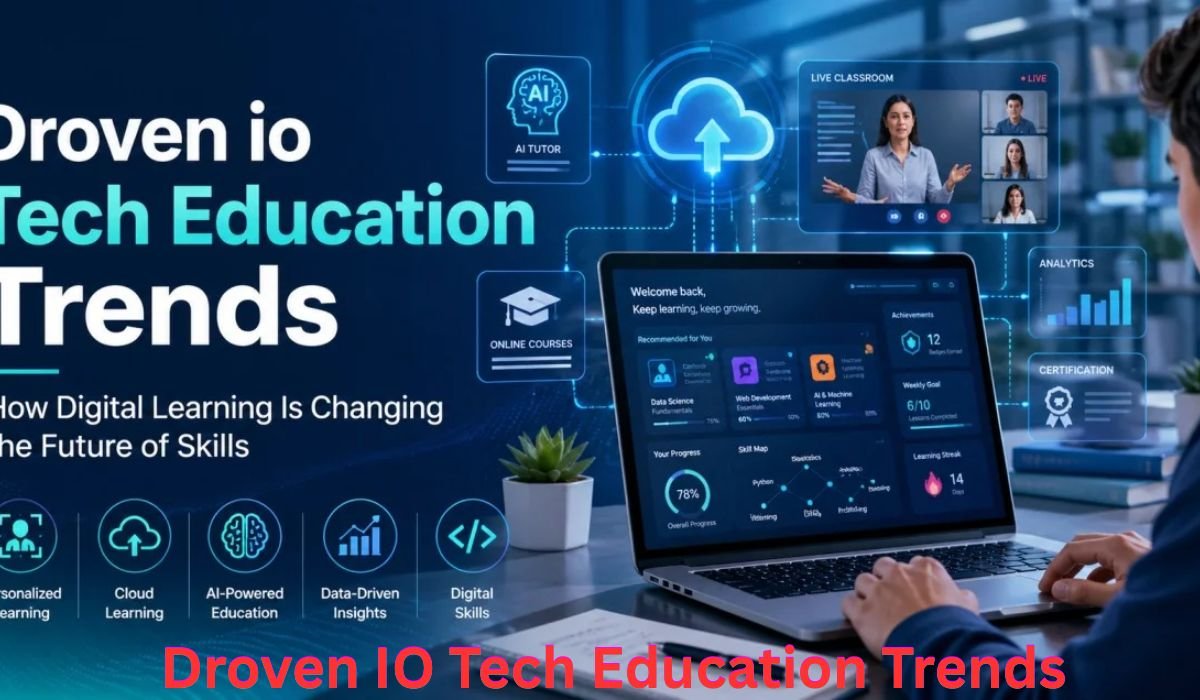

Education is changing faster than ever before. Education technology is no longer just a buzzword, it is the backbone of modern learning. From AI-powered classrooms to digital learning platforms, the way people gain knowledge has shifted dramatically. Droven IO tech education trends sit at the heart of this global transformation.
The world no longer waits for traditional systems to catch up. EdTech is filling the gaps, making online learning available to anyone with a device and internet connection. Whether you are a student, a professional, or a lifelong learner, these trends are shaping your future whether you realize it or not.
The Evolution of Education Technology
Education technology has come a long way from simple e-learning portals. Today, it powers entire ecosystems of learner-centered education, replacing outdated teacher-centered models with systems that adapt to individual needs.
- Shift from static content to dynamic, interactive platforms
- Rise of digital platforms that support millions of users globally
- Growth of learning management systems (LMS) for structured delivery
- Increasing focus on career-focused education over theoretical study
| Era | Approach | Key Tool |
| 2000s | Teacher-led | Whiteboards & projectors |
| 2010s | Blended learning | LMS platforms |
| 2020s | AI-driven | Adaptive learning systems |
| 2026+ | Immersive & personalized | VR, AR, AI tutors |
Digital transformation in education is not slowing down. Every year brings smarter tools, better platforms, and more inclusive access to quality learning resources worldwide.
Artificial Intelligence in Education
Artificial intelligence (AI) is the single biggest force reshaping education today. AI in education means students get support that is tailored, timely, and incredibly effective something traditional classrooms struggled to provide.
- Intelligent tutoring systems guide learners step-by-step
- Automated assessment reduces teacher workload significantly
- Personalized learning paths built from student behavior data
- AI-powered tools available around the clock for instant support
| AI Feature | Benefit | Impact Level |
| Personalized paths | Custom learning speed | Very High |
| Automated grading | Saves teacher time | High |
| AI tutors | 24/7 availability | Very High |
| Predictive analytics | Early intervention | Medium-High |
Machine learning algorithms analyze how each student engages with content. This allows platforms to adjust lesson difficulty, suggest resources, and flag areas where a learner needs extra attention all in real time.
The Importance of AI Literacy
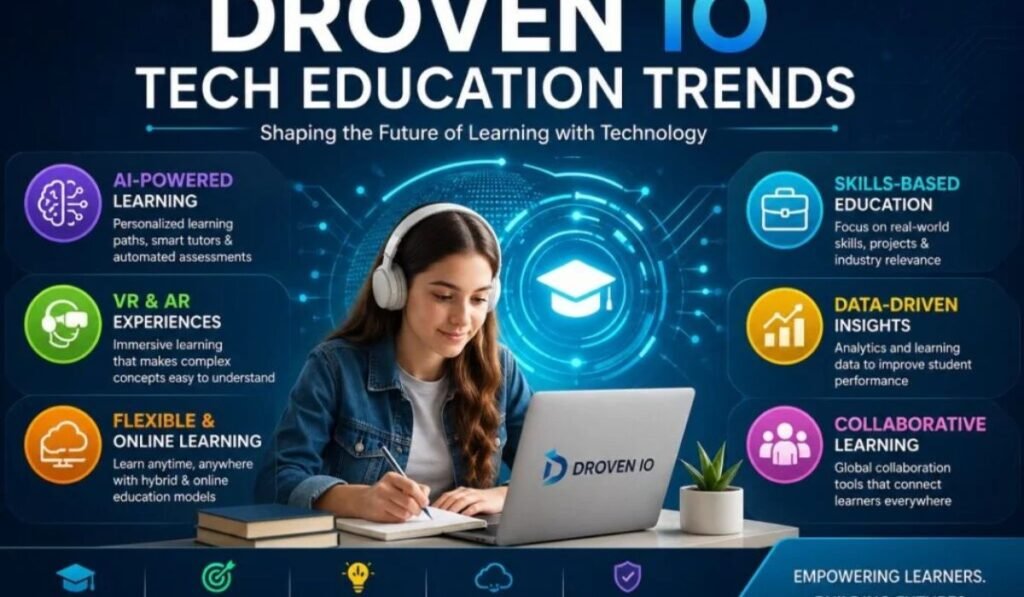
Understanding artificial intelligence is no longer reserved for computer scientists. AI literacy has become a fundamental life skill, much like reading or writing.
- Grasp basic machine learning concepts
- Identify and evaluate AI-generated content critically
- Use AI-powered tools responsibly and effectively
- Understand AI ethics and how algorithms make decisions
Digital intelligence is growing in demand across every industry. When learners understand how AI works, they become active contributors rather than passive consumers of technology. Schools and training programs that teach AI ethics early are giving students a genuine competitive advantage in the workforce.
Immersive Learning with VR and AR
Virtual Reality (VR) and Augmented Reality (AR) are turning passive reading into active experience. Immersive learning puts the student inside the lesson rather than just in front of it.
- Medical students practice surgery through simulation-based learning
- History learners explore ancient civilizations via VR tours
- Engineering students build and test prototypes in virtual labs
- Smart classrooms blend physical and digital environments seamlessly
| Technology | Use Case | Learning Benefit |
| VR | Virtual field trips | Deep experiential learning |
| AR | Overlaying data on objects | Real-time contextual info |
| Mixed Reality | Training simulations | Safe hands-on practice |
| 360° Video | Cultural immersion | Emotional engagement |
Experiential learning through VR and AR is proven to improve retention. When students physically interact with content even virtually they remember it far longer than if they simply read about it.
Skills-Based Learning Approach
The job market does not care much about certificates alone anymore. Skills-based learning is what employers are actively seeking when they hire today.
- Project-based learning gives students hands-on portfolio work
- Competency-based education measures what you can actually do
- Focus on coding, data analysis, and practical learning
- Workforce readiness built into every course module
Skill development through real tasks and industry-aligned projects produces graduates who hit the ground running. Companies are partnering with EdTech platforms specifically to train learners in the exact skills their teams need, closing the gap between education and employment faster than ever before.
Cloud Computing and Automation
Cloud computing has democratized access to powerful learning tools. Students no longer need expensive hardware; everything runs in the browser through digital platforms.
- Access online education platforms from any device, anywhere
- Practice on real industry tools hosted in the cloud
- Learn automation workflows used in real business operations
- Learning management systems (LMS) powered by cloud infrastructure
Automation skills are fast becoming non-negotiable. Industries from logistics to finance are built on automated systems, and learners who understand these workflows, how to set them up, manage them, and troubleshoot them are already ahead of the curve in terms of employment readiness.
Flexible and Hybrid Learning Models
Rigid timetables are fading out. Flexible learning puts control back in the hands of the student, which is exactly where it belongs.
- Hybrid learning combines online convenience with in-person engagement
- Self-paced learning accommodates working adults and caregivers
- Global education access removes geographic barriers entirely
- Evening and weekend options make upskilling realistic for busy professionals
Online learning and in-person instruction are no longer opposites; they are partners. The best hybrid learning programs weave both together thoughtfully, giving students flexibility without sacrificing community, mentorship, or hands-on practice that only face-to-face settings can deliver.
Microlearning and Short Courses
Attention spans are shorter and schedules are busier. Microlearning meets learners where they are by breaking content into focused, manageable pieces.
- Bite-sized learning segments completed in 5–15 minutes
- Short courses covering one specific skill at a time
- Easy to revisit and review without sitting through entire modules
- Perfect for continuous learning between work and personal commitments
| Format | Duration | Best For |
| Video lessons | 3–8 minutes | Concept introduction |
| Quizzes | 2–5 minutes | Knowledge checks |
| Infographics | 1–3 minutes | Quick reference |
| Podcasts | 10–20 minutes | Commute learning |
Modular learning through micro-formats is not a shortcut, it is a smarter structure. When content is purposefully chunked, learners absorb and apply it faster, making microlearning one of the most effective tools in modern EdTech.
Data-Driven Education
Data-driven education replaces guesswork with precision. Platforms now use learning analytics to understand exactly how each student is progressing.
- Performance tracking identifies strengths and weak spots instantly
- Personalized feedback delivered automatically based on quiz results
- Student progress monitoring helps teachers intervene at the right time
- Big data in education informs curriculum design decisions at scale
Data analytics gives educators a clear picture of what is working and what is not. Instead of waiting until exam results come in, institutions can adjust teaching methods, improve course content, and personalize support in real time making the entire learning process sharper and more responsive.
Gamification in Learning
Gamification makes learning genuinely enjoyable. By introducing game-based learning elements, platforms turn study sessions into something students actually look forward to.
- Leaderboards create healthy competition among peers
- Badges and rewards celebrate progress and consistency
- Unlockable content keeps learners curious and moving forward
- Motivation in learning increases significantly with game mechanics
Learning engagement through gamified systems is not just about fun, it is about psychology. When students earn points, climb rankings, or unlock achievements, their brains release dopamine, reinforcing the habit of learning. This is why game-based learning delivers measurably better retention and completion rates.
Cybersecurity and Ethical Awareness
As digital learning expands, so do the risks. Cybersecurity education is now a core component of responsible tech-driven learning environments.
- Teach data protection practices from an early age
- Understand digital privacy rights and platform policies
- Discuss ethical technology use across AI, social media, and data tools
- Build information security awareness for future careers
Online safety is a shared responsibility between institutions, platforms, and learners themselves. As more sensitive student data moves onto cloud systems and AI-powered tools, knowing how to recognize phishing, protect credentials, and question data use is no longer optional; it is essential professional knowledge.
Lifelong Learning and Continuous Upskilling
The idea that learning ends after graduation is completely outdated. Lifelong learning is the new professional standard in every industry.
- Upskilling keeps professionals relevant as technology evolves
- Reskilling opens doors to entirely new career paths
- Continuous learning habits separate high performers from the rest
- Online learning platforms make daily learning achievable for everyone
Career advancement today belongs to those who keep growing. The skills that landed someone a job in 2022 may already be partially obsolete in 2026. Professionals who commit to continuous learning even just a few hours per week are far better positioned to adapt, lead, and succeed in a rapidly shifting job market.
Stackable Credentials and Certifications
Traditional four-year degrees are not disappearing, but they are being joined by something more nimble. Stackable credentials let learners build expertise piece by piece.
- Complete short courses and combine them into recognized qualifications
- Certifications tied directly to specific job roles and industry needs
- Modular learning paths designed around career goals
- Faster route to employment readiness without multi-year commitments
Academic credentials are evolving. Employers are increasingly accepting and even preferring candidates who hold relevant certifications alongside or instead of traditional degrees. Professional development through stackable pathways gives workers the agility to pivot quickly without starting their education all over again.
Emerging Technologies Shaping Education
Emerging technologies are pushing innovation in learning into territory that would have seemed like science fiction just a decade ago.
- Internet of Things (IoT) powers connected, smart classrooms
- Blockchain technology securely stores and verifies academic credentials
- Voice assistants and accessibility technology make learning more inclusive
- Technology-driven education reaches underserved communities globally
The future of education belongs to institutions that embrace these tools rather than resist them. Global education access is expanding because of these innovations students in remote regions can now access the same quality of educational resources as those in major cities, leveling the playing field in ways that were simply not possible before.
Read Also This: Michelle Smallmon Biography 2026: Age, Career, Family, and Net Worth
Real-World Application and Industry Collaboration
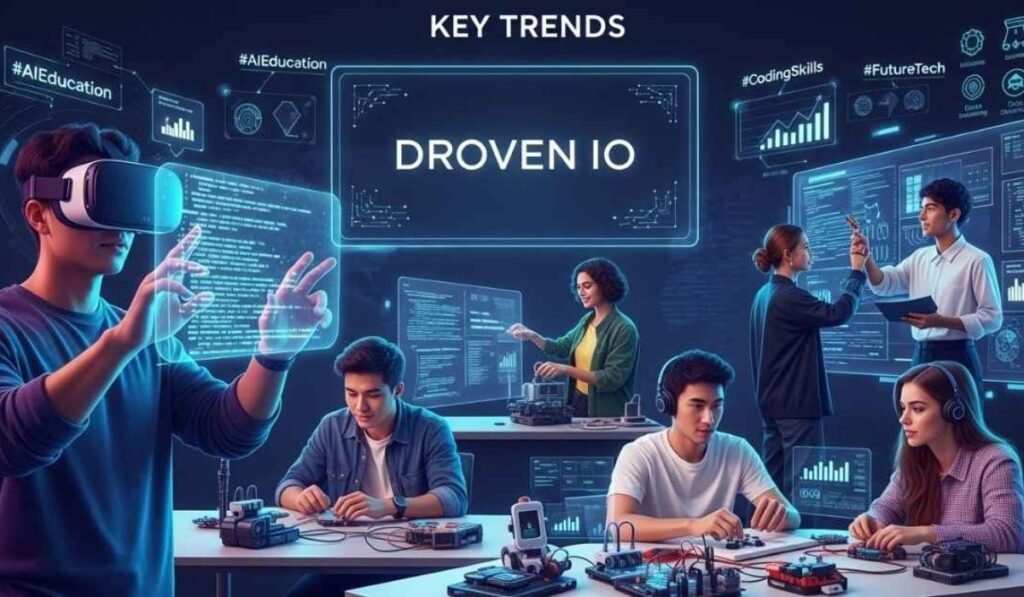
Knowledge without application is incomplete. Real-world application is what separates a learner who understands theory from one who can actually deliver results.
- Internship programs embed students in real business environments
- Industry collaboration shapes curriculum to match industry demand
- Job-ready skills developed through live projects and case studies
- Problem-solving skills sharpened through genuine workplace challenges
Employment readiness improves dramatically when education and industry work together. Companies that co-design courses with EdTech providers produce graduates who need far less on-the-job training. This partnership model benefits everyone, learners enter careers faster, employers hire more confidently, and education institutions maintain stronger reputations for delivering real workforce readiness.
Frequently Asked Questions
What is shaping modern learning today?
Droven IO Tech Education Trends shows how technology is changing education fast with smart tools, digital classrooms, and better student engagement.
Why are new tools important for students?
Droven IO Tech Education Trends explains that modern tools help students learn faster, stay focused, and understand lessons in simple and interactive ways.
How is artificial intelligence helping learning?
Droven IO Tech Education Trends highlights AI support that gives personalized lessons, quick feedback, and smarter ways to improve student performance daily.
What role does online learning play now?
Droven IO Tech Education Trends shows online learning gives flexibility, easy access, and allows students to study anytime from anywhere comfortably.
Why are skills becoming more important than degrees?
Droven IO Tech Education Trends focuses on skill-based learning where real abilities matter more, helping students prepare better for modern job markets.
How do virtual and immersive tools help students?
Droven IO Tech Education Trends explains VR and AR create real-like experiences, making learning fun, engaging, and easier to understand complex topics.
What is the future of education systems?
Droven IO Tech Education Trends predicts flexible, hybrid systems combining online and offline learning to give students better control over education paths.
Conclusion
Droven IO tech education trends are not a distant vision; they are actively reshaping how the world learns right now. From AI in education to immersive learning, microlearning, and stackable credentials, every trend points toward a system that is more personalized, more practical, and more powerful than anything that came before it.
The most important thing any learner or educator can do today is stay curious and stay adaptable. Lifelong learning, upskilling, and embracing digital transformation are not optional extras; they are the foundation of future success. Those who lean into these EdTech innovations will not just keep up with the future; they will help build it.

